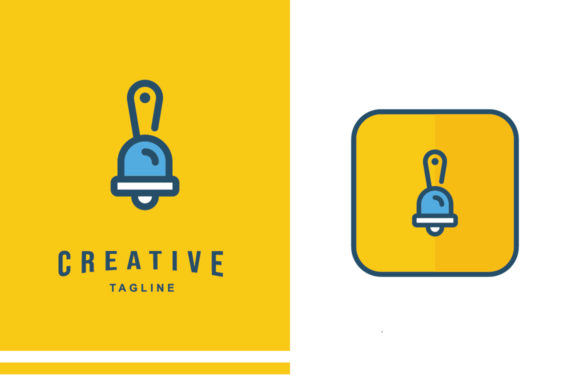
Back to School Icon - Bell: A Practical Vector Asset for Any Creative Workflow
When you need a reliable visual cue for education, schedules, or reminders, a well-crafted icon set can save hours of design time. The Back to School Icon - Bell is one such resource—a collection of vector files centered around the classic school bell motif, ready to drop into projects that require a clear, professional symbol. But beyond its obvious association with classrooms and timetables, this set can serve as a flexible component in a wide range of workflows, from marketing campaigns to personal productivity systems.
Understanding what this icon set includes, how to handle the files, and where it fits into your planning and execution process will help you use it effectively without extra trial and error. Below, we break down the practical aspects of integrating the Back to School Icon - Bell into your projects, whether you are a freelancer prepping client materials, an educator designing handouts, or a small business owner updating seasonal branding.
What the Back to School Icon - Bell Includes and Why It Matters
The set comes as EPS10 100% fully resizable vector files, accompanied by a JPEG preview at 300 DPI. This combination gives you maximum flexibility. Vector files let you scale the bell icon to any size without losing resolution—from a tiny favicon to a large poster. The EPS10 format is compatible with most professional vector editors like Adobe Illustrator, CorelDRAW, and Affinity Designer, as well as some free alternatives such as Inkscape. The included JPEG preview is handy for quick mock-ups, client approvals, or use in documents where a raster image is sufficient.
Because the files are 100% resizable, you can modify the icon’s shape, color, and stroke weight without quality loss. This means you aren’t stuck with a single version; you can adapt the bell to match your brand palette, adjust its size relative to other elements, or even combine it with other vector assets. The preview JPEG at 300 DPI is print-ready if you only need a quick static version, though for full control you will want to open the EPS files.
Where the Back to School Icon - Bell Fits Into a Typical Workflow
The bell icon can serve different roles depending on the phase of your project. Thinking of it as a modular asset helps you place it correctly in your process.
During Research and Planning
When you are still defining the visual language for a campaign, lesson plan, or product launch, having a library of vector icons speeds up moodboarding. You can pull the school bell icon into a style tile or layout sketch to see how it interacts with typography and other graphics. Because it is vector, you can quickly experiment with different color overlays and sizes without hunting for a new image. This early integration helps you decide if the bell symbol conveys the right tone—whether you are aiming for nostalgia, urgency, or alertness.
The JPEG preview is also useful for rough drafts in presentation software like PowerPoint or Google Slides. Drop the 300 DPI image into your deck to communicate the concept to stakeholders, then replace it with the vector file in the final production stage. This separation keeps your planning agile.
During Execution and Production
Once the concept is approved, the real work begins. Open the EPS10 file in your vector editor. The fully resizable nature means you can create multiple variants: a thick-line version for headers, a thin-line version for infographics, a filled version for buttons. Save each variant as a separate SVG or PNG for different platforms. If you are preparing a website, you can export the icon as an SVG sprite or inline SVG. For print materials, you can place the vector directly into InDesign or Illustrator files with no resolution concerns.
Because the icon is part of a focused set (back to school theme), it pairs naturally with other education-related elements like books, pencils, and apples. If you maintain a master vector library, you can import the bell icon and align it with your existing style guides. This consistency saves review time and ensures your materials look cohesive across banners, flyers, and social media.
Post-Launch and Long-Term Use
After a project goes live, the bell icon continues to be useful for revisions and future campaigns. Because it’s a vector file, you can archive it in an organized folder or asset management system. Tag it with keywords like “school,” “bell,” “alert,” “schedule,” so you can find it again for next year’s back-to-sale promotion or a newsletter about registration deadlines. The JPEG preview can serve as a quick thumbnail in your file browser.
From a quality control standpoint, the EPS10 format saves you from re-downloading or recreating the icon. If you need to adjust it for a new medium—for example, shrinking it for an app icon—you simply scale it down and export. No pixelation, no re-licensing. Over multiple projects, this reusability cuts down on asset procurement time and keeps your visual identity consistent.
Practical Implementation Tips for Different Professionals
The Back to School Icon - Bell can be adapted to many real-world scenarios. Here are workflow-specific suggestions for the people who will actually handle the files.
- Marketers and campaign managers: Use the bell as a call‑to‑action accent in email headers or landing pages. Because the vector is scalable, create a large version for hero images and a small one for secondary buttons. Export as PNG at 2× resolution for retina displays. The icon works well with urgency messaging like “Limited time” or “Reminder,” so keep it consistent across your ad creative.
- Educators and instructional designers: Embed the bell in worksheets, presentation slides, or classroom signage. Use the JPEG preview if you are printing handouts on a standard printer—300 DPI gives crisp results at regular sizes. For digital resources like interactive PDFs, export the vector as SVG to keep file sizes low while retaining scalability.
- Small business owners and entrepreneurs: Add the bell to your storefront’s schedule page or booking system. If you run a tutoring center, use the icon on your website to highlight hours or notifications. Because the file is EPS10, you can easily recolor it to match your brand without hiring a designer. Open it, change the fill, and save a new version.
- Bloggers and content creators: Use the bell as a secondary graphic for posts about back-to-school tips, productivity, or time management. The JPEG preview works well as a featured image thumbnail if you are short on time. For more polished content, include the vector icon in your custom graphics using a design tool like Canva (import the EPS as a vector) or Photoshop (open it via Illustrator integration).
- Freelancers and design agencies: Store the bell icon in a shared asset library accessible to your team. Because the workflow often involves multiple file formats, keep the EPS10 as the source file. When a client requests a specific color variation, you can generate it in seconds. This standardization reduces version confusion and speeds up handoffs.
Organizing and Managing the Vector Files for Efficiency
One of the biggest time wasters in creative work is hunting for the right asset. Adopt a simple naming convention for the EPS10 files. If the set contains multiple bell variants (e.g., filled, outline, colored), rename them clearly: bell-filled.eps, bell-outline.eps, bell-thin.eps. Place them inside a folder titled Icons_BackToSchool along with the preview.jpg. Then add the folder to your project’s assets directory. This way you can open the folder and see the JPEG preview for instant visual recognition, then grab the vector file you need.
If you use a digital asset management platform (like a DAM or even a cloud drive with tags), attach metadata such as “school,” “bell,” “vector,” “back to school.” This makes the icon searchable across all your projects. For offline use, keep a local archive with the same structure and back it up on an external drive or cloud storage. Because vector files are small (usually under 1 MB each), you can store hundreds of them without worrying about space.
Compatibility and Quality Control Considerations
The EPS10 format is widely supported, but it pays to verify compatibility with your specific software version. If you are using a newer version of an application, test that the file opens correctly. Occasionally, older EPS files may have issues with transparency or effects. The Back to School Icon - Bell is described as 100% fully resizable vector files, so in most cases you can edit the paths directly. Check the layers panel to see if the icon is grouped or outlined. Grouped objects are easier to scale proportionally; outlined strokes require adjusting stroke weight if you enlarge significantly.
When exporting for web, always test the icon at actual display size. A bell that looks balanced at 200×200 pixels might need minor stroke adjustments at 32×32 pixels. Because you have vector source, these tweaks take seconds. For print, the JPEG preview at 300 DPI can be used as a placeholder, but always replace it with the vector in the final high-resolution file. This avoids any hidden artifacts from JPEG compression.
If you plan to share the icon with a colleague who doesn’t have vector editing software, export a PNG version with a transparent background at the intended size. Include the DPI setting appropriate for their output (72 DPI for screen, 300 DPI for print). This preserves the look without requiring them to install a new tool.
Long-Term Value and Reusability
One purchase of the Back to School Icon - Bell gives you a durable asset that can serve multiple seasons, campaigns, and formats. Because it is vector, you are not limited to the original design—you can mirror it, rotate it, combine it with text, or apply effects like drop shadows. Over time, you may develop a family of icons from the same source file that all share a consistent visual language.
From a workflow perspective, this reduces the need to re-purchase or re-license similar icons for different projects. The EPS10 files are future-proof as long as your software continues to support the format. The JPEG preview is a low-maintenance fallback for quick references. Together, they make the bell icon a small but reliable part of your toolkit.
By treating the icon as a system component rather than a one-off graphic, you integrate it smoothly into your routine. Whether you are planning a back-to-school email sequence, designing a classroom schedule poster, or building a notification UI, the bell symbol works when you have the right file ready and the know-how to adapt it.