Back to School Calculator Design: A Practical Vector Resource for Creative Workflows
When you are building a brand, designing educational materials, or creating merchandise, the right graphic asset can save hours of work. The Back to School Calculator Design is one such resource—a set of vector files built around a clean, recognizable calculator icon that fits perfectly into back-to-school themes, productivity visuals, and academic branding. This is not just a single image file; it is a complete package that includes AI, EPS, PNG, JPG, and SVG formats, all designed to be opened, edited, and resized without any loss in quality.
For anyone working on logos, illustrations, animations, or t-shirt designs, having a vector-based calculator graphic means you can adapt the same core element across print, web, video, and merchandise without redrawing it each time. The following sections walk through what this design pack contains, where it fits into real workflows, and how to get the most out of it from preparation through long-term use.
Understanding the Asset and Its Role in Creative Work
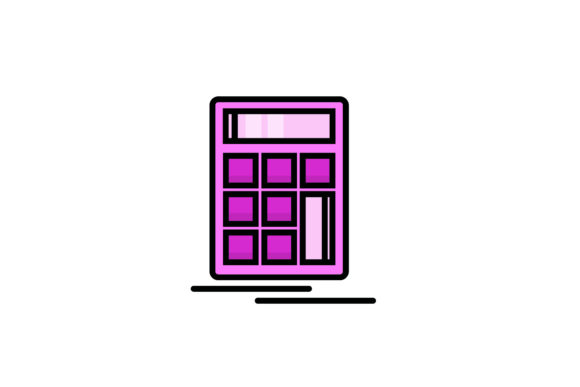
At its core, the Back to School Calculator Design is a vector illustration of a calculator, styled for modern, clean use in educational and professional contexts. The download includes five file formats:
- 1 AI 10 file – Native Adobe Illustrator format, fully editable with layers and paths intact.
- 1 EPS 10 File – Encapsulated PostScript, compatible with many vector editing applications.
- 1 PNG file – Raster image with transparent background, ready for immediate use on web or in presentations.
- 1 JPG file – High-resolution raster version for quick placement in documents or mockups.
- 1 SVG file – Scalable Vector Graphic, ideal for web development, apps, and responsive design.
Because these are vector files, every curve, button, and display screen on the calculator is defined mathematically, not by pixels. This means you can scale the graphic from a tiny icon on a mobile app to a large banner for a trade show booth without any blurring or jagged edges. For professionals who care about consistency across formats, this is a significant advantage over static raster images.
Where the Calculator Design Fits in Your Workflow
One of the most practical aspects of a vector design pack is its flexibility across different stages of a project. The Back to School Calculator Design can be used before, during, or after a creative or business task, depending on your needs.
Before a Project: Planning and Mockups
If you are in the early planning phase for a new product, course, or brand identity, having a ready-made calculator graphic allows you to create quick mockups. Instead of spending time drawing a calculator from scratch, you import the SVG or AI file into your design tool and adjust colors, proportions, and layout. This helps you test how a calculator icon might look on a logo, a flyer, or a website header before committing to a final design direction.
For educators putting together a back-to-school campaign, the PNG or JPG version can be dropped directly into a slide deck or handout to visualize a budgeting lesson or a math-themed activity. The vector source gives you the freedom to later refine those visuals without needing to recreate them.
During a Project: Building with the Vector File
Once a project is underway, the AI and EPS files become the primary working assets. Because they are fully editable, you can:
- Change the color of the calculator body, buttons, or display to match a brand palette.
- Remove or add elements, such as customizing the display screen to show a specific number or equation.
- Combine the calculator with other vector elements like notebooks, pencils, or apples to create a cohesive back-to-school illustration.
- Use the SVG version for web development, embedding it directly into HTML or using it in CSS for responsive scaling.
This direct editing capability saves time and reduces the friction of working with multiple software packages. You can move between Illustrator, Affinity Designer, Inkscape, or even web-based editors without worrying about compatibility—EPS and SVG are widely supported formats across platforms.
After a Project: Repurposing and Scaling
After the main project is complete, the vector design continues to provide value. The same calculator graphic used in a logo can be repurposed for t-shirt designs, promotional stickers, social media animations, or classroom posters. Because the vector files maintain quality at any size, you do not need to track down a higher-resolution version or ask a designer to rebuild the graphic. The JPG and PNG versions serve as quick distribution formats for clients or team members who do not use vector software, while the original AI and EPS files remain the editable source for future modifications.
Practical Steps for Integrating the Files into Your Process
Getting the most out of a vector design pack requires a bit of preparation and organization. Here are some practical implementation tips that smooth the integration into your existing workflow.
Organize Your Digital Assets Early
When you download the Back to School Calculator Design, store all five files in a dedicated folder with a clear naming convention. For example, calculator-design-main.ai, calculator-design-main.eps, and so on. If you plan to use the graphic across multiple projects, consider keeping the SVG and AI files in a central library of vector assets that you can quickly access from your design software. This prevents you from searching through downloads or email attachments when you need the clean, editable version.
Choose the Right File for the Task
Not every situation calls for the same format. For instance:
- Use the SVG for web design, app interfaces, and interactive prototypes because it scales smoothly and remains lightweight.
- Use the AI file when you need full control over layers, effects, and typography in Adobe Illustrator.
- Use the EPS file if you work in a cross-platform environment or need to open the file in an older version of a vector editor.
- Use the PNG for social media posts, email headers, or anywhere a transparent background is required without vector editing.
- Use the JPG for draft mockups, print proofs, or document inserts where file size matters more than transparency.
By matching the file format to the output medium, you maintain quality while keeping your workflow efficient.
Edit with Intent, Not Just Aesthetics
When you modify the calculator design, think about how it interacts with other assets. For example, if you are creating a series of icons for a budgeting app, keep the line weights, corner radii, and color treatments consistent across all icons. Vector files make it easy to apply global changes—if you later decide the calculator outline should be 2px instead of 3px, you can adjust that in minutes. This kind of consistency builds trust with your audience and makes your overall design feel polished.
Use Cases Across Different Roles
The Back to School Calculator Design is not limited to graphic designers. Here is how different professionals might incorporate it into their own routines.
Entrepreneurs and Small Business Owners
If you sell educational products, planner accessories, or productivity tools, a calculator icon is a natural fit for logos, packaging, and marketing materials. The vector design allows you to produce branded merchandise—like t-shirts, tote bags, or stickers—without hiring a designer to create a custom calculator graphic each time. You can hand off the AI or EPS file to a print shop and know the result will be crisp at any size.
Educators and Course Creators
Teachers who build their own worksheets, slide decks, or online course thumbnails can use the PNG or JPG version immediately. When they want to customize the calculator—adding a specific number on the display or recoloring it to match a classroom theme—they can open the SVG in a free editor like Inkscape or Canva (with SVG support) and make changes without learning complex software.
Content Creators and Bloggers
For a blog post about back-to-school budgeting or study tips, the calculator graphic serves as a featured image or an in-article visual. Using the SVG version ensures the graphic stays sharp on retina displays, and the EPS file can be imported into animation tools to create simple motion graphics for social media snippets.
Marketers and Publishers
When designing flyers, brochures, or email campaigns for a back-to-school sale, having a consistent visual asset across all channels matters. The vector design allows you to maintain the same calculator icon across print (JPG, EPS) and digital (PNG, SVG) without noticeable quality differences. This consistency reinforces brand recognition and reduces the cognitive load on your audience.
Ensuring Consistency and Quality Control Across Deliverables
One of the overlooked benefits of a vector design pack is how it supports quality control across a project. When multiple people on a team need to use the same graphic, having a single source file prevents version drift. The AI or EPS file becomes the master copy. Anyone who needs a variation—a different color, a rotated orientation, a cropped version—works from that master, not a screenshot or a low-res JPEG.
For print projects, always export from the vector file to the required DPI (typically 300 DPI for high-quality print). The PNG and JPG included in the pack are likely at a standard resolution, but if you need a size not covered, you can export from the AI or EPS file at the exact dimensions you need. This eliminates the guesswork of upscaling a small raster image, which often introduces artifacts.
Long-Term Value and Preparation for Future Projects
The Back to School Calculator Design is not only useful for immediate tasks. Over time, you will accumulate a library of vector assets that can be mixed and matched for new projects. A calculator graphic used in a back-to-school campaign one year can be reused in a graduation-themed design the next, or recombined with other icons to create a dashboard for a productivity app.
To extend the life of the asset, keep the AI and EPS files in a version-controlled folder structure. If you make edits, save them as separate variations rather than overwriting the original. This way, you preserve the clean base design and can always revert to it if a specific customization does not work out.
Also consider that the SVG file is an excellent choice for collaborative web projects. Because SVG code can be minified and embedded directly into HTML, developers can treat it as a component rather than a static image. This makes the calculator design usable in responsive layouts without extra server requests, which benefits site performance.
Wrapping Up the Practical Use of a Vector Calculator Design
The Back to School Calculator Design is a straightforward but valuable resource for anyone who needs a clean, editable calculator graphic. By understanding the strengths of each file format—AI for deep editing, EPS for broad compatibility, SVG for web, PNG for transparency, and JPG for quick use—you can integrate this design into nearly any workflow. It supports planning, execution, and repurposing without demanding extra time or technical skill.
Whether you are designing a logo for an educational startup, building an animation for a social campaign, or printing t-shirts for a school event, starting with a vector that is openable, editable, and resizable without losing quality sets you up for consistent, efficient output. Preparation, organization, and a clear sense of where the asset fits into your process make all the difference between a graphic that is used once and one that becomes a reliable part of your creative toolkit.